

Ensures the high precision,high steady and high efficiency of our machines

fertigation pdf
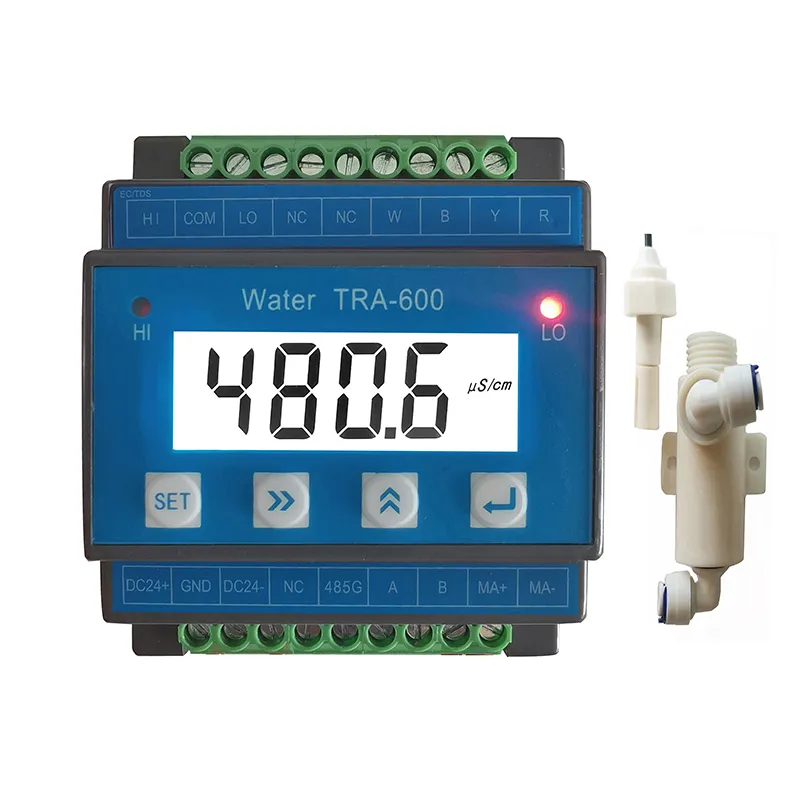
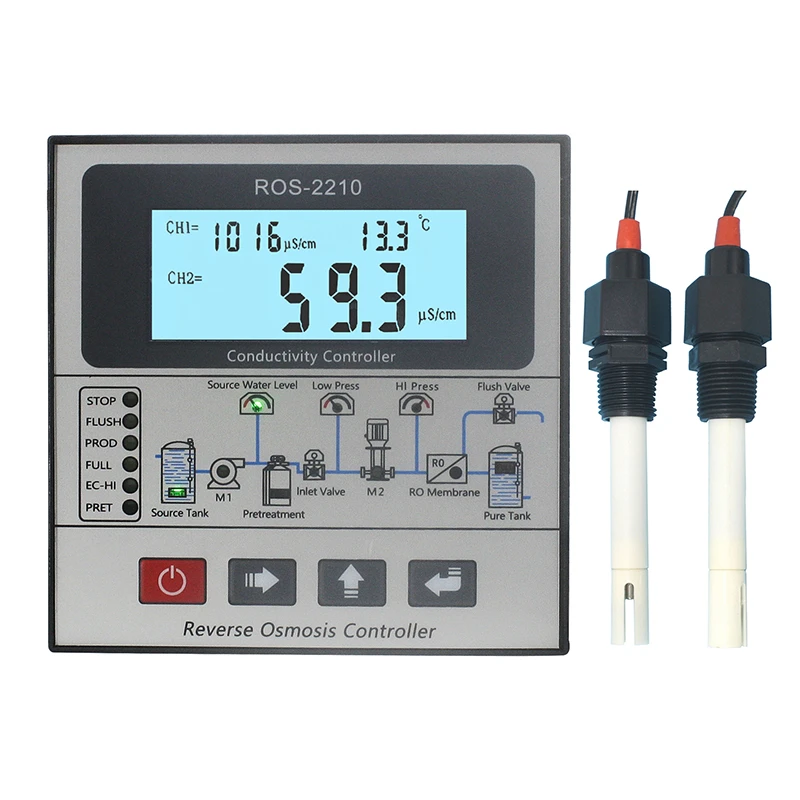
Total Dissolved Solids refers to the total content of various inorganic salts and organic matter dissolved in water, and is one of the important indicators for measuring water quality. Although Total Dissolved Solids itself is not a direct pollutant, its numerical value can reflect the ion concentration in water, thereby affecting the applicability and safety of water. Therefore, strict monitoring and control of Total Dissolved Solids is crucial for various purposes such as irrigation and industrial processes. The impact of Total Dissolved Solids is particularly significant in agricultural irrigation Different crops have varying degrees of tolerance to salt content in water. Irrigation water with high electrical conductivity can lead to soil salinization, hinder plant roots from absorbing water and nutrients, and ultimately affect crop growth and yield. Especially for salt sensitive crops, even lower Total Dissolved Solids values can cause significant damage. Therefore, when selecting irrigation water sources, it is necessary to evaluate Total Dissolved Solids and take corresponding measures based on crop types and soil characteristics, such as adjusting irrigation frequency, improving soil, selecting salt tolerant crops, etc., to mitigate the negative impact of Total Dissolved Solids. On the other hand, water with low Total Dissolved Solids is not always the best choice. Appropriate mineral content also has a certain promoting effect on plant growth, so it needs to be balanced according to the actual situation. Total Dissolved Solids also plays an important role in industrial processes Many industrial production processes, such as cooling systems, boiler water, and electronic component cleaning, have strict requirements for water quality. High total dissolved solids meters can lead to equipment corrosion, pipeline blockage, and decreased product quality, seriously affecting production efficiency and economic benefits. For example, in the power industry, excessive Total Dissolved Solids in boiler water can easily form scale, reduce heat transfer efficiency, and even cause equipment damage. In the food processing industry, Total Dissolved Solids can affect the taste, color, and shelf life of food. Therefore, many industrial enterprises need to pre treat water, such as using technologies such as reverse osmosis and ion exchange, to reduce Total Dissolved Solids and ensure the smooth progress of the production process. In addition to irrigation and industrial sectors, Total Dissolved Solids also plays an important role in drinking water safety, environmental monitoring, and other areas Although the Total Suspended Solids meter itself does not directly harm human health, excessively high Total Dissolved Solids usually means that the water contains excessive minerals, organic matter, or harmful substances, which may indirectly threaten drinking water safety. Therefore, many countries and regions have set clear standards for the Total Dissolved Solids value of drinking water. In terms of environmental monitoring, Total Dissolved Solids can serve as an indicator of water pollution. By monitoring the changes in Total Dissolved Solids, water pollution problems can be detected in a timely manner and corresponding control measures can be taken to protect water resources. In summary, water TDS level is an important indicator that affects water quality and has a significant impact on various uses such as irrigation and industrial processes. Understanding the sources, influencing factors, and control methods of Total Dissolved Solids can help to better utilize water resources, improve production efficiency, ensure drinking water safety, and ultimately achieve sustainable development. Therefore, in the process of water resource management and utilization, it is necessary to pay attention to the monitoring and control of Total Dissolved Solids to ensure the effective utilization of water resources and environmental protection. Total Dissolved Solids FAQs What is Total Dissolved Solids? Why is it crucial in water quality monitoring? Total Dissolved Solids refers to the total amount of inorganic salts (calcium, magnesium, sodium, potassium, etc.) and small amounts of organic matter dissolved in water, measured in ppm (milligrams per liter). It directly affects the applicability of water: Irrigation: High Total Dissolved Solids may lead to soil salinization and inhibit plant water absorption. Industry: In boilers or cooling systems, high Total Dissolved Solids are prone to scaling and corrosion of equipment. Drinking water: Exceeding 500ppm may affect taste and contain excessive harmful ions such as lead and arsenic. What is the Total Dissolved Solids safety threshold for irrigation water? How to alleviate the impact of high Total Dissolved Solids? Safety range: <450ppm: Suitable for most crops. 450-2000ppm: Salt tolerant crops (such as barley and cotton) should be selected. >2000ppm: Direct irrigation is not recommended. Mitigation measures: Dilution: Mix low Total Dissolved Solids water sources (such as rainwater). Soil flushing: Regularly irrigate excessively to flush out salt. Choose salt tolerant varieties such as sugar beets and date palm trees. How to control Total Dissolved Solids in industrial processes? What are the common technologies? Industrial water (such as pharmaceuticals, electronics, boilers) typically requires extremely low Total Dissolved Solids (even<10ppm), and control methods include: Reverse osmosis (RO): removes over 90% of dissolved salts. Ion exchange: Replacing harmful ions (such as calcium and magnesium) with resin. Distillation: Obtaining ultrapure water through vaporization and condensation. Electrodeionization (EDI): a combination of electrodialysis and ion exchange, used for high-purity requirements. What is the relationship between Total Dissolved Solids and Electrical Conductivity (EC)? What should be noted when measuring? Relationship: Total Dissolved Solids is directly proportional to conductivity (Total Dissolved Solids ≈ k × EC, k is a coefficient of 0.5-0.7), as dissolved ions conduct electricity. Measurement points: Temperature calibration: Conductivity is affected by temperature and needs to be automatically compensated (e.g. 25 ℃ reference). Probe maintenance: Regularly clean the electrodes to avoid interference from bubbles or pollutants. Distinguish between Total Dissolved Solids and suspended solids: Total Dissolved Solids only measures dissolved solids and requires filtration for detection. Can high Total Dissolved Solids water be used for drinking water? How to handle it? Is it safe? Total Dissolved Solids high ≠ harmful, but may contain excessive impurities. Specific ion analysis (such as nitrate and heavy metals) is required. Handling method: Household: RO water purifier, distillation kettle. Community level: Nanofiltration (NF), Electrodialysis. Emergency: Activated carbon adsorption (partial organic matter)+boiling (kills microorganisms, but cannot reduce Total Dissolved Solids).
Latest News
2026-04-06 00:02
When it comes to monitoring dissolved oxygen levels, the oxygen probe sensor is a vital tool. Our oxygen probe sensor is designed to provide precise and reliable readings in various aquatic environments. Whether you're testing water quality in a river, lake, or aquarium, or conducting research in a scientific laboratory, our sensor ensures that you get accurate data every time. The highly sensitiv
2026-04-06 00:45
Introduction to Advanced Multi-Parameter Analysis In modern industrial process control, precise and reliable measurement of multiple water quality parameters is paramount for operational efficiency, regulatory compliance, and product quality. Traditional single-parameter instruments often fall short in providing the comprehensive, real-time data necessary for critical decision-making. This necessi
2026-04-05 23:02
In the evolving landscape of water treatment and industrial process automation, PH/ORP-6850 industrial online controller stands as a pinnacle of precision, reliability, and intelligent control. Manufactured and distributed by Hebei JIRS Import & Export Co., Ltd. ( https://www.watequipment.com ), the PH/ORP-6850 is engineered to ensure accurate pH and ORP (Oxidation-Reduction Potential) measurement
